Finding things I can use for displays in my medieval tent in the modern world is tricky. A lot of things need to be taken into account- what can I get? What can I afford? What am I prepared to compromise on?
This was one of those things. Yes, I could have commissioned a full size hand-coopered tub for a display but transporting it would have been a major pain in the rear. The bath I decided to use was a half wine barrel bought from a gardening outlet. It's solid wood, but it has metal bands which couldn't pass for wood or rope bound or forged metal. Even though most baths don't show forged black bands, they are infinitely preferable to grey, modern-looking ones.
With that in mind, I needed to paint them. It's hard because I don't want to get paint on the wood and the little edge needs to be black too. The best way to do this was to slip a little piece of paper between the timber and the metal and slide it around where I could. This wasn't too hard, as in the heatwave we are having, the bands have loosened a little.
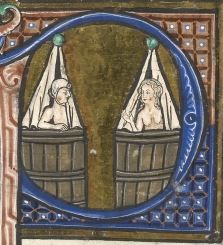
Sloane 2435, Aldobrandino of Siena, Le Régime du corps (ff. 1-75v); Image du monde (ff. 77-133v) France, N. Dated to the 3rd quarter of the 13th century (perhaps c. 1285) Folio 8v.
The Tacuinum sanitatis of Liege, folio 76, writes of the virtues of bathing with Water of A Pleasurable Warmth:
Nature: Warm and humid in the second degree. Optimum: The kind that opens the pores with moderate heat or with a fever. Usefulness: For bodies with open pores; furthermore, it lowers the temperature. Dangers: for intestinal flow. Neutralisation of the dangers: With astringent drinks.
I've been looking at 14th century laver stands. For those who are new to medieval hygiene, that's a washing station, which may or may not be portable. We see later ones affixed to the wall looking like an urn with the drain underneath, but I'm taking today about the ones with a bowl and a hanging jug or laverbo. Since I wished to make one, I needed to make a comparison. I've only ever seen one type recreated for reenactment, and that's the first image- a tall, round pole with possibly a counterbalance, a small bowl and little double spouted pot and a towel.
The one I am to make is the second image. a separate pole for the upright, since I feel that when it comes to dealing with members of the public, it will be sturdier, and the bowl will be supported better. The first set of three here all have the cross base and a hanging pot, two double spouted, and one pot.
Extant double spouted laverbos are mostly dated to the early 15th century, but they are represented in art throughout the 14th century also.
The second five have the same double spouted pot, but have pedestal bases with round bases, two of them with feet. These ones are attached to probably, a wall.
The next four show stands with cross bases and pedestal bases but with a jug, instead of a laverbo. Two of the jugs have three feet and two have solid bases. The second image here is from the Bohun Psalter, rather than the Roman de la Rose, and the fourth image is also from a different manuscript.
It's an interesting blend, but it's worth noting that many of these seem to be permanent fixtures and have towels at the ready nearby or on the stand itself. I'll be making one to go with my bath house display. Stay tuned.
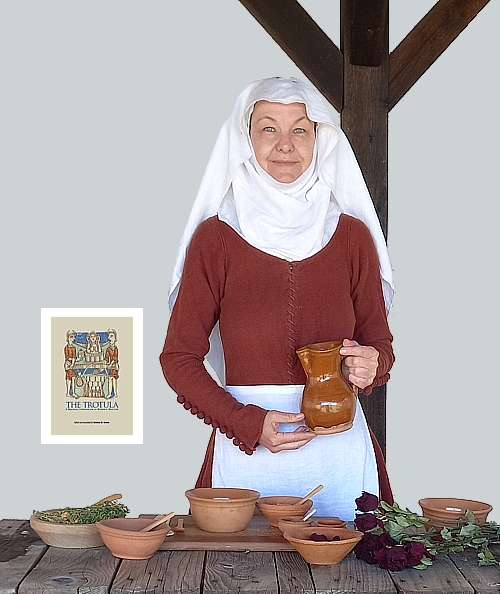
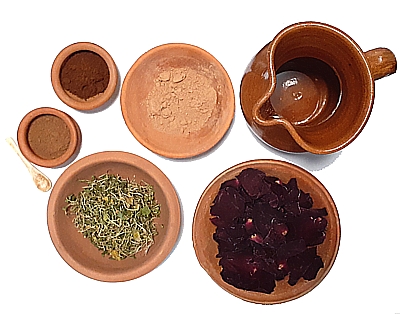
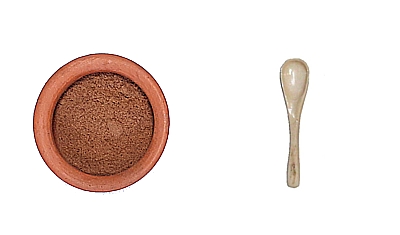
I have to admit, when I was setting up for the Trotula Hair Powder, I was extremely grateful that I'd been hoarding little ceramic bowls in case I needed them for re-enacting. I really wish that I'd taken this photo without the cutting board underneath. The contrast of the grey timber of the old wood table is much nicer for photos.
Making a medieval hair powder using the recipe attributed to Trotula in On Cosmetics.
The Trotula, or the set of three texts attributed to Trotula, included a section called On Women's Cosmetics, and includes recipes for beauty. Among these, we find a hair powder, so that the hair remains sweetly scented. In the section about On Various Kinds of Adornments, it reads:
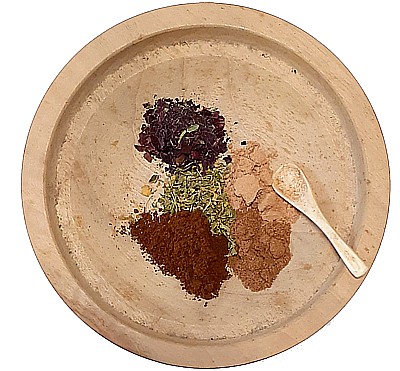
But when she combs her hair, let her have this powder.Take some dried roses, clove, nutmeg, watercress and galangal. Let all these, powdered, be mixed with rose water.With this water let her sprinkle her hair and comb it with a comb dipped in this same water so that [her hair] will smell better.And let her make furrows in her hair and sprinkle on the above-mentioned powder, and it will smell marvelously.
I have recreated this powder and the scented rosewater to use in my MEDIEVAL BATH DISPLAY and have included a step by step guide to my approach, including my expectations and how it really worked out.
The overall verdict? An absolute delight and one recipe where Trotula really comes through.
The expectation:
There were a number of things to think about before I started.
Drying the ingredients or buying them pre-powdered?
Can I buy galangal and watercress locally?
Air dry or oven dry the grown ingredients?
Watercress doesn't smell like anything in particular, so what does it bring to the mix?
Which roses should I use?
When I add the rosewater to the powder, do I need to let it dry again and re-powder it?
How much of the powder do I add to the rosewater for the combing water so it isn't gluggy?
How much of which ingredients should I use?
Will it actually make any real difference to actual hair?
How long will it last as a hair powder?
Do any of the spices and plants have benefits associated with them which makes them particularly useful for a hair powder other than that they smell nice?
The reality:
This was a journey of great discovery, where I discovered:
Less is more of some things.
Watercress has quite a sweet smell when dried.
Air-dried roses take forever and don't crumble well.
Watercress plants can be bought from supermarkets!
Galangal is available at all good Indian spice stores.
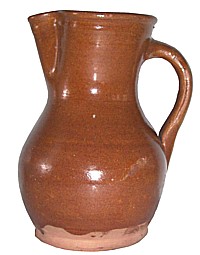
Kitchen things Spoon Bowl for mixing Jug for rosewater Mortar and pestle for powdering
Method:
My plan was to buy what I could already prepared, and dry the other herbs myself without the use of modern ovens or drying implements. I felt that this would give me (perhaps) a more honest attempt at what might be achieved by a medieval woman at home. That said, I did buy the rosewater already made and several of the spices pre-ground. Mostly the reason for this was because I was genuinely unsure what quantities I would need to achieve a goodly amount of ground spices to use.
I checked some of the properties attributed to the plants being used in the hair powder to see if they were chosen for beneficial reasons, and was interested to note that Hildegarde von Bingen pairs nutmeg with galingale (galangal) to cure palsy of the brain and nutmeg itself against bitterness of the heart. Roses, we already know, are tied to the emotion, love.
Roses
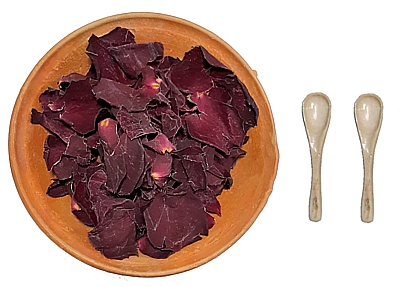
I bought regular roses from the supermarket and air dried them in a bunch in my kitchen. This was a terrible idea, as the rose heads took a really long time to dry. I had some in the cupboard which were quite old, but they still didn't powder well. For future rose powder, I would separate the petals and dry them on a tray in a really hot sun. These petals had some smell but like many modern roses, not a great deal, so for my next powder, I will use especially scented roses. I started with one spoon, but ended up adding a second one.
Watercress
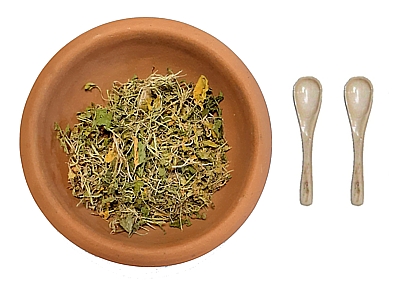
After finding it powdered online expensively with added shipping, I was surprised to find it fresh at the supermarket. It smelled like wet plant when a few leaves were crushed but after drying, had a sweet meadow smell which was very nice. I dried this by blotting the excess moisture with paper towels and sun drying over several days. I would spread it thinner on the tray for drying next time. Initially, I used one spoon for the mix, but later added a second one.
Galangal (Galingale)
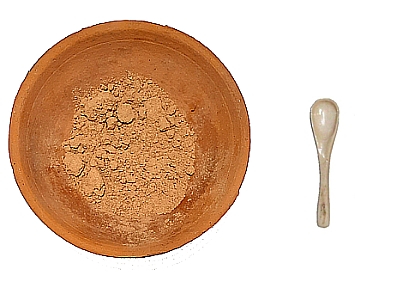
I bought this from an Indian Spice store but was able to find it afterwards in supermarkets. I will be planting in my garden for future fresh root but this was an easy option for me this time. It has a gingery smell which was very nice, and I used one spoon full.
Cloves
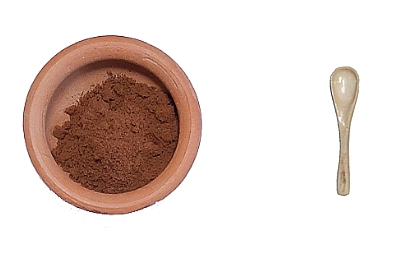
I bought this already powdered simply because I couldn't get hold of any whole ones at the moment, which was odd because it's usually very easy to get. The smell is quite strong, and I expected it to overpower everything else if I used an equal amount, but it was tempered by the other ingredients. Hildegarde recommends cloves to clear stuffiness of the head, although whether Trotula chose it to include for that reason, I do not know.
Nutmeg
I bought powdered nutmeg although I already had some in my cupboard because I wanted fresh. I expected the nutmeg to make the entire powder reminiscent of baked cookies so I felt it was a good inclusion. Because I needed a starting point, I used a single spoon full for the powder, and it seemed to work well at that level.
Rosewater
I was honestly going to have a go at making some but on discovering four different brands of it at cheap prices, I piked out and bought some. I feel that even without the addition of any of the powder, it would be successful as a hair perfume by itself. Whether or not the spices would ruin it or mix well with it was to be seen.
Method:
The roses and the watercress were not completely dry enough to get a fine powder in the quantity I needed, so in order to make a start, I fine chopped the rose petals and gave the watercress a really thorough crushing with my hands.
I used a single spoon of each of the dry ingredients as a starting point expecting the cloves to completely overpower everything else in the mix and was very surprised to find that not only was the mix extremely nice on a one-to-one basis, it was also quite strong, meaning a little would go a long way. This is particularly good as the price of spices in the middle ages was likely to be expensive depending on where one lived. It wasn't going to be cheap and some of the plants were unlikely to have been locally grown.
I then added a heaped teaspoon to about a cup (or two cups? I didn't measure it first before I poured it in the jug) and stirred it into the rosewater. The mix didn't blend in especially well which left me to wonder whether a finer powder would have worked better, whether a really good shake would have been better, or whether it ought be shaken then left for a day or two to infuse the rosewater and then strained before use.
I felt the spices NOT being strained out would be more likely to be more fragrant against the scalp as it warms with body heat over the day.
The results:
products 1: The hair powder. I really liked this made in a one-to-one ratio but decided to add extra roses and watercress as they had a far more subtle aroma. This changed the overall smell, but whether it improved it or not would be more of a personal choice. I expected the cloves to overpower everything else, and while it certainly was a strong smell, it wasn't overpowering in my mind.
When sprinkled in the hair along furrows as suggested by Trotula, it smelled very nice. After several hours of wear, the hair retained a really nice scent and I would say this absolutely works.
products 2: The scented rosewater. This would have smelled lovely without the additives, but with the additives, it was quite lovely, with a stronger rose smell. My liquid was a little full of flotsam due to my roses and watercress not being properly dried and powdered, but it worked quite well.
The test subject reported that it wasn't itchy or unpleasant to wear and after a day of wear, said perhaps her hair was nicer afterwards.
I used the remainder of the rosewater and spice liquid in my bath and soaked my hair in the water and didn't rinse it out and the following day it seemed a little less frizzy on the ends. This may have been the rosewater entirely, and I reserve judgement until I test that theory.
The "sniff test" audience results:
Being of a scientific mind, I asked both re-enactors and general members of the public to sniff the hair powder and choose a response from four choices. A diverse range of ages were polled, and of 40 people questioned, the responses were as follows:
OMG no! Get it away from me! (1 vote)
Meh. Not offensive or inoffensive. (2 votes)
Smells nice, but I would not use it on my person. (17 votes)
I would use this in my hair as a medieval person. (20 votes)
The following comments were spontaneously added:
Like cookies! (3 people)
MMm! Oh! Like a tea! (3 people)
That smells like mulled wine! Is that mulled wine? (1 person)
I can smell Star anise! (4 people)
As a general trend, younger people liked the smell more and would potentially use it as a medieval person, whereas older people liked the smell but not so much that they would wear it. Of the older persons who would wear it, all mentioned cookies or mulled wine at Christmas time, indicating that it invoked good feelings associated with the scent.
Attempting to recreate a medieval recipe can be tricky because the amounts given are often described as "some," "a little," "twice as much," and "enough." Some proportions can be gathered from this. Use twice as much rosewater and plain water, for instance. other times, one is flying blind. As part of my new medieval bath display, I hope to have a hair powder made from a medieval recipe. I'll be making it for the first time next weekend at an historical event and taking notes. At this point, I have the recipe and the ingredients, some grown and dried, others sourced from a local spice shop.
Medieval women were just as concerned with beauty products for their skin and hair as women are today. Many herbal preparations were used to cleanse, protect, lighten or dye the hair. Hair loss was also a concern which was attended to with herbal balms and tinctures. These recipes were found in manuscripts like the Tacuinum Sanitatus, which were copied and recopied.
Most recipes were herbal, but some had more exotic ingredients. The Trotula, or the texts attributed to Trotula, include On Women's Cosmetics, and include recipes for beauty including a beautiful-smelling hair powder, so that the hair remains sweetly scented. In the section about On Various Kinds of Adornments, it reads:
But when she combs her hair, let her have this powder. Take some dried roses, clove, nutmeg, watercress and galangal. Let all these, powdered, be mixed with rose water. With this water let her sprinkle her hair and comb it with a comb dipped in this same water so that [her hair] will smell better. And let her make furrows in her hair and sprinkle on the above-mentioned powder, and it will smell marvelously.
This is a new event this year, and although December can be incredibly hot, I'm keen to go to this. It's a the bottom of Australia, and I live about half way up the coast, but it'll still be an overnight drive towing a trailer.
I have applied to have my new bath display out for the first time in the re-enactor's village, but it really depends on whether I get accepted along with my friend who is applying to have her Historical Medical display accepted. We can both do talks as well, but we will be traveling together, so it's all in or none.
Fingers crossed for me.
I really need to finish off the last bits and pieces for the display. I'd be taking my smaller octagonal medieval tent so it wouldn't be the full Bed-and-bathroom, it will be just the bath section. I'd very much love to have the linen roses curtains finished and I'd like to make a laver stand as well, which shouldn't be too hard, even with my basic woodworking skills.
The 12th century hair powder I'm experimenting making at the moment will be a great sensory addition too! I hope I can get a workable recipe before December. The watercress is still drying on my kitchen bench, so it won't be too long before I can have a go at that.
I had a heck of a time trying to buy galangal today but an even worse one trying to get watercress today. Only to discover that I could buy it fresh from either of our everyday supermarkets in the produce section. I've never even seen it there before, so it came as a rather large surprise.
Quite a few other spices I was able to buy in bulk from an Indian Spice Market, only a short bus detour on the way home from work.
I'm going to attempt to recreate a hair powder recipe from (attributed to) Trotula's 12th century manuscript on cosmetics. If I'm successful, I will have this at the bath display for people to smell and micro-test for themselves. I've seen a number of other people make it, so I'm reasonably confident I should be able to produce a good result and an interesting post on the steps as I go.
![[personal profile]](https://www.dreamwidth.org/img/silk/identity/user.png)